May 28, 2026
3 Min. Read
For years, organizations treated learning modalities as primarily a content decision—should training happen in a classroom, through eLearning, video, mobile, or virtual reality? But training delivery alone doesn’t improve workforce performance.
Frontline enterprises have learned something more fundamental: The modality isn’t the strategy. Workforce performance is.
Today’s learning leaders need more than an off-the-shelf training solution. They need a workforce performance system designed to strengthen skills where work actually happens. Employee performance only improves when learning is accessible, relevant, reinforced in the flow of work, and connected to real operational outcomes. That’s especially true in restaurants, hospitality, retail, manufacturing, and construction, where capability gaps surface quickly in customer satisfaction scores, turnover rates, productivity, compliance risk, and operational consistency.
Why one-size-fits-all learning no longer works
Traditional learning platforms were built around content delivery: assign a course, track completions, generate a report. That model was adequate when training was primarily compliance-focused and employees learned at desks during scheduled sessions.
Frontline workforces operate under entirely different conditions. Employees are moving between shifts and locations, working on mobile devices, learning in short windows of time, solving real operational problems in the moment, and navigating rapidly changing business priorities. In these environments, static training programs lose effectiveness quickly. Organizations need learning experiences designed around the realities of frontline work, not systems that expect frontline employees to adapt to them.
The most effective learning strategies are multimodal
High-performing organizations no longer rely on a single delivery method. Instead, they combine modalities deliberately to strengthen workforce capability from multiple angles–blending instructor-led learning, mobile microlearning, video-based instruction, AI-powered coaching, on-the-job training, scenario-based reinforcement, immersive simulations, and in-the-flow support.
Research shows that combining modalities—particularly active and reinforced learning approaches—improves retention, engagement, and the transfer of knowledge into real-world performance. For frontline enterprises, this is especially critical because employees rarely have the luxury of uninterrupted training time. Learning must fit into the rhythm of work itself.
Microlearning works because frontline work moves fast
One of the most significant shifts in workplace learning has been the rise of microlearning. Employees don’t always need a 60-minute course. Often, they need a quick refresher before a shift, targeted reinforcement after onboarding, a brief coaching moment during work, or fast answers without interrupting operations.
Microlearning addresses this reality by delivering focused, bite-sized learning moments over time rather than relying on one-time information transfers. It also aligns with what we know about memory and behavior change: spaced repetition and ongoing reinforcement significantly outperform traditional one-and-done learning experiences when it comes to long-term retention. AI-powered microlearning and reinforcement help organizations continuously strengthen workforce capability, treating learning as an ongoing process rather than a discrete event.
Frontline employees need learning in the flow of work
Most traditional learning systems were built for desk-based employees. Frontline workforces were accommodated later, which is precisely why adoption often struggles.
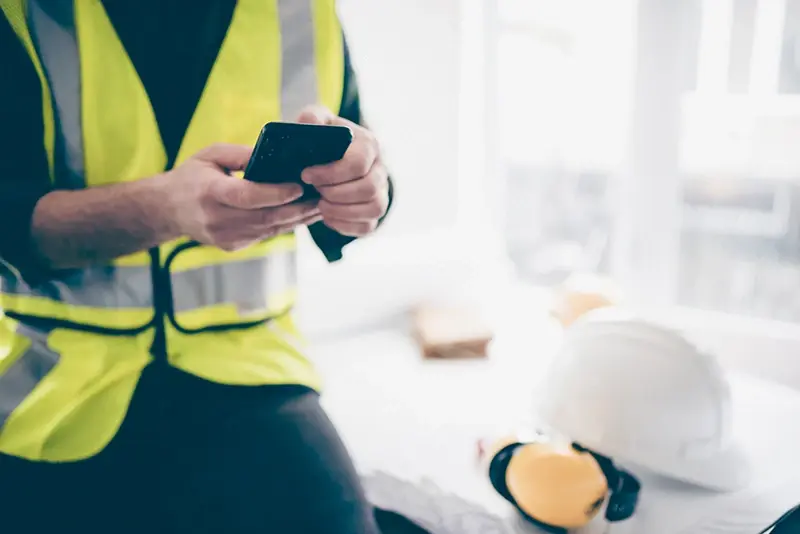
Frontline-native delivery matters. These kinds of employees don’t want to stop work, open a laptop, navigate multiple systems, and search through a course catalog to find an answer. They need support in the moment. Frontline organizations need a platform built specifically for dynamic environments, supporting QR-code-based training access, native mobile learning, on-the-job training capture, in-the-flow reinforcement, AI-powered assistance, and access without a corporate email requirement.
AI is transforming how organizations personalize learning
Artificial intelligence is reshaping workplace learning far beyond content generation. Organizations can now use AI to identify emerging skill gaps, recommend targeted reinforcement, generate personalized learning paths, adapt experiences by role or capability level, deliver contextual coaching in real time, and forecast training impact before rollout. AI functions as the intelligence layer connecting workforce skills, learning delivery, and business performance outcomes. That changes how organizations think about modality entirely.
Instead of asking “Which format should we use?”, leading organizations ask “What learning experience will most effectively close this capability gap?” — and the answer varies. Sometimes it’s microlearning. Sometimes immersive practice. Sometimes AI-guided reinforcement. Sometimes instructor-led coaching.
Modality becomes a business decision tied to workforce performance, not simply a content preference.
Immersive and experiential learning are essential
Some workforce skills cannot be developed through passive learning alone. Reading about conflict resolution is fundamentally different from practicing it, and watching a safety video is not the same as navigating a simulated emergency.
Immersive learning environments such as simulations, scenario-based practice, and AI-powered coaching allow employees to develop decision-making skills in realistic situations without real-world risk. For organizations, this translates to faster skill development, stronger retention, better operational readiness, reduced compliance and safety exposure, and more meaningful competency validation. Most importantly, it moves learning beyond passive consumption and into genuine performance preparation.
The future of learning is adaptive, connected, and measurable
The old model focused on delivering content. The next generation of workforce performance systems focuses on continuously strengthening capability. That means learning experiences must adapt to operational realities, support multiple modalities, reinforce skills over time, meet employees where work actually happens, and connect development directly to business outcomes.
Forward-thinking organizations are moving beyond traditional LMS thinking toward systems that continuously map workforce skills, identify gaps, deliver purpose-built learning, and measure impact against operational KPIs in addition to completion rates. Business leaders are no longer asking “Did employees complete the training?” They’re asking “Did workforce capability improve performance?”—that’s a fundamentally different conversation that requires a different system.
Modality matters because workforce performance matters. The organizations that succeed are building systems that continuously improve workforce performance at scale and leveraging AI to develop a smarter, more data-driven approach to workforce development.